Tips & Advice9 min
Bathtub to Shower Conversion in Malaysia: Is It Worth It in 2026?
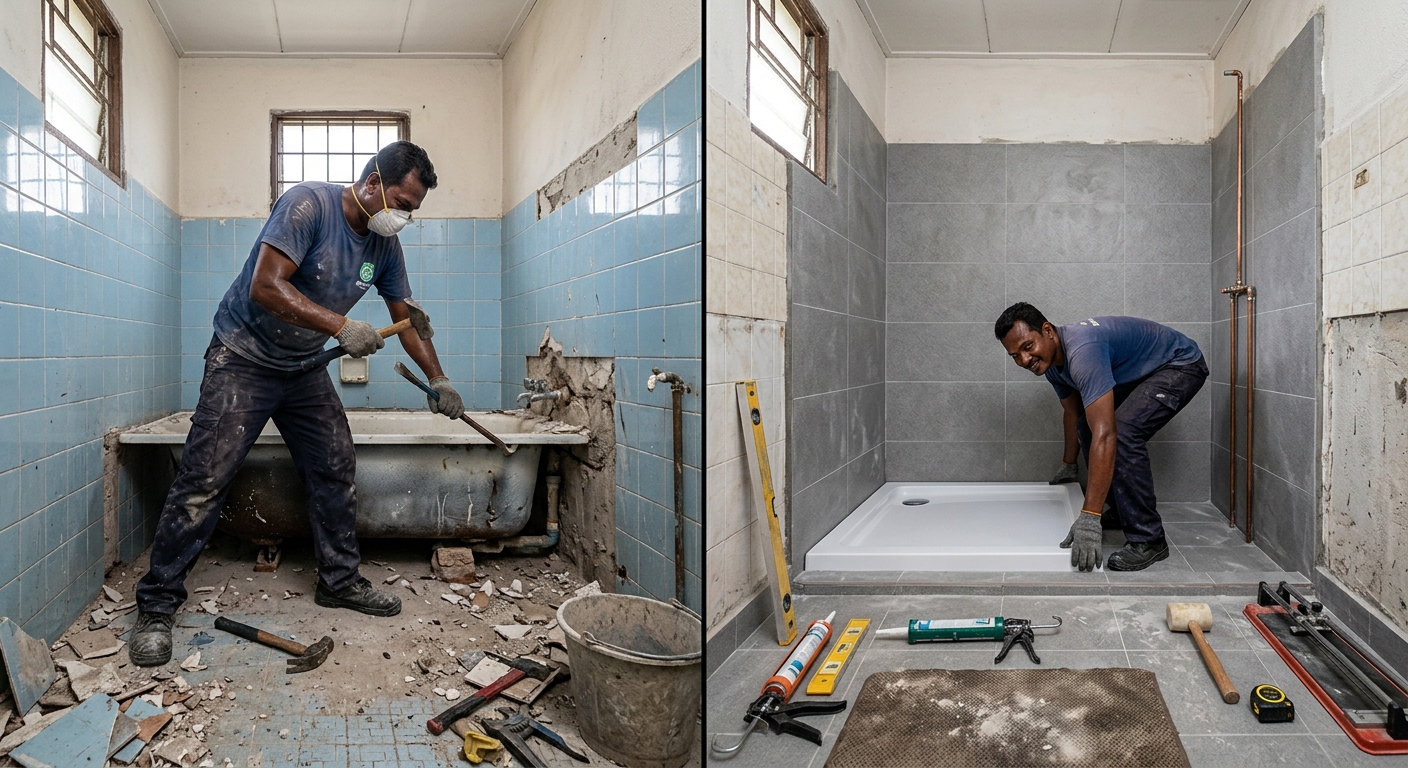
Should You Convert Your Bathtub to a Walk-In Shower?
Walk into almost any Malaysian home that has a bathtub and you will find the same scene: a tub doubling as a laundry basket, a storage zone for mops and buckets, or a drying rack for clothes. If your bathtub has not actually held bath water in months — or years — you are in the majority. Converting that unused tub into a walk-in shower is one of the most requested projects at BathBro, and after more than 2,500 bathroom projects across Malaysia, we can say it is usually one of the highest-value changes a homeowner can make.
This 2026 guide walks you through the full decision: why tubs sit unused in Malaysia, what a conversion really costs in RM, the day-by-day work process, the waterproofing details that decide whether your renovation lasts, and the handful of situations where keeping the tub is actually the smarter call.
Why Malaysian Bathrooms Rarely Use the Bathtub
Bathtubs were designed for cold climates, where a long hot soak at the end of the day is a genuine luxury. Transplanted into a Malaysian home, they run into five practical problems:
- The climate works against soaking. When it is 32 degrees outside with high humidity, very few people crave a hot bath. Most tubs get used a handful of times after moving in, then never again.
- Water bills add up. Filling a standard tub takes 150–300 litres of water. A typical shower uses 40–80 litres. A family that switches from baths to showers can cut that portion of usage by half or more.
- Space is too valuable. The average Malaysian apartment bathroom is compact, and a tub occupies the single largest footprint in the room. Removing it frees up roughly 4–8 square feet of floor area — transformative in a small space.
- Maintenance is a chore. Tubs collect grime along the base, the silicone sealant around the rim discolours and peels in our humidity, and cleaning inside a tub is hard on the knees and back.
- The step-over edge is a fall risk. Climbing over a wet tub edge is genuinely dangerous, especially for elderly parents and young children. A level-entry shower removes the hazard entirely.
Benefits of a Bathtub to Shower Conversion
Once the tub is out, the gains are immediate and permanent:
- More usable space — the reclaimed 4–8 square feet makes the whole room feel larger, and opens up layout options like a longer vanity or proper wet-and-dry zoning. If your room is tight, pair the conversion with our small bathroom renovation ideas to maximise every inch.
- Lower water usage — showers use a fraction of the water a bath does, and you will see the difference on the bill.
- Far easier cleaning — a glass panel and tiled walls wipe down in minutes; there is no tub base or perimeter sealant to scrub.
- A modern look — a glass-screened walk-in shower is the single change that most makes an older bathroom look current.
- Safety for every generation — level or low-threshold entry, with room to add grab bars and a fold-down seat if you are planning ahead for ageing parents.
- Resale appeal — in most Malaysian market segments, a clean modern walk-in shower shows far better than an ageing tub. (The exception is family-focused landed homes — more on that below.)
Bathtub to Shower Conversion Cost in Malaysia (2026)
A conversion is almost never just "remove the tub, add a shower head". Because the tub area must be hacked, re-plumbed, waterproofed and re-tiled, the work is effectively a partial-to-full renovation of the wet zone. That is why we price it in the same tiers as a full bathroom renovation:
| Package | Typical Price | What It Covers |
|---|---|---|
| Budget | RM5,000 - RM8,000 | Tub removal and disposal, plumbing adjustment, waterproofing of the shower zone, standard tiles, framed shower screen, standard shower set |
| Mid-range | RM8,000 - RM15,000 | All of the above plus full floor and wall re-tiling, full-room waterproofing membrane, semi-frameless or frameless screen, rain shower set, new accessories |
| Premium | RM15,000 - RM30,000+ | Complete transformation: premium large-format tiles, frameless glass, concealed piping, niche shelving, new vanity and toilet, designer fixtures |
Four factors move the price within those bands:
- How much tiling gets replaced. Patching only the tub zone is cheaper, but new tiles rarely match old ones perfectly. Most owners re-tile the whole room for a clean result.
- Whether the drain must move. A tub outlet and a shower floor trap are rarely in the same spot; relocating drainage means extra hacking and screeding.
- Screen type. A framed screen costs the least, while frameless glass adds roughly RM1,000–3,000 depending on size and thickness — our shower screen guide compares every option with prices.
- Condo versus landed. Condos may involve management approvals, lift protection and restricted working hours, which stretches the labour days.
The Bathtub Conversion Process, Step by Step
A typical conversion by an experienced crew takes 5–7 working days:
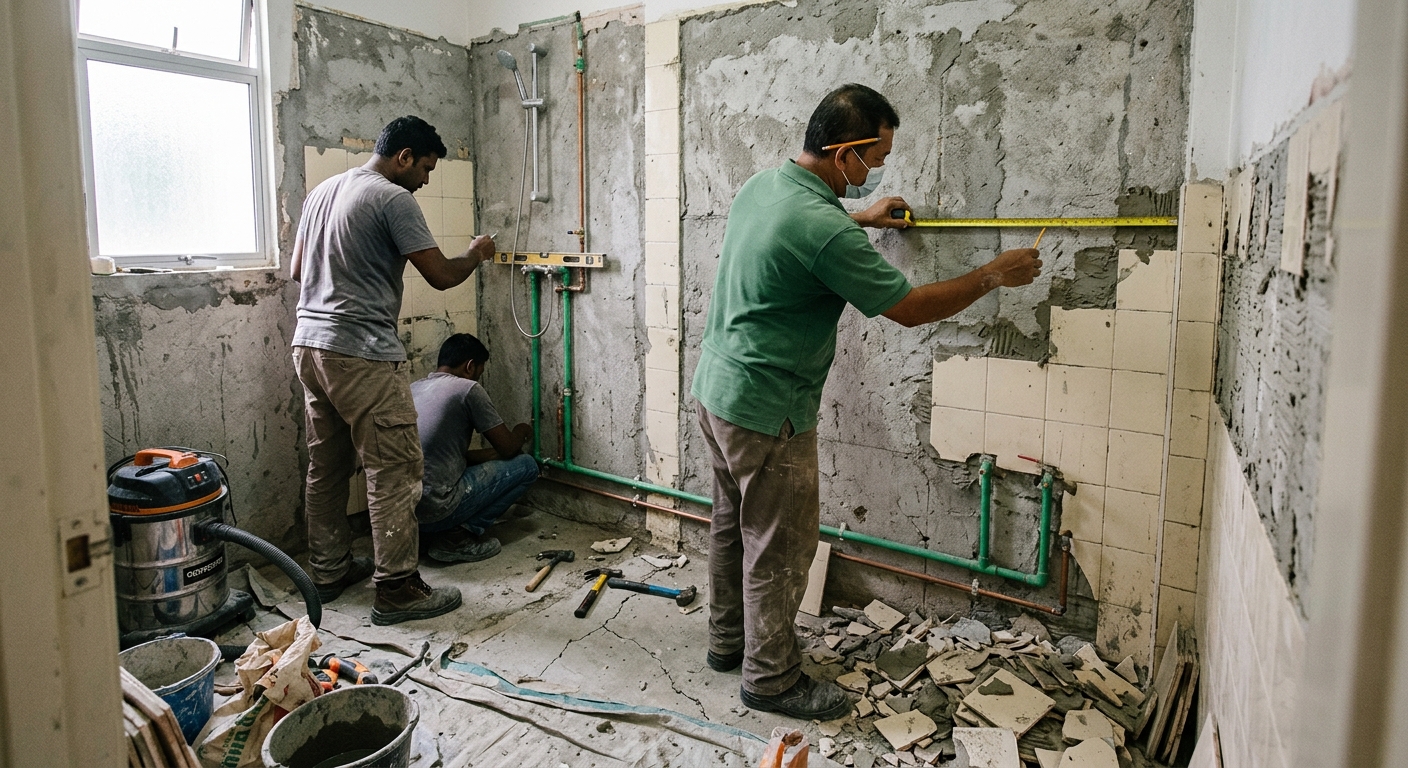
- Day 1: Tub removal and disposal, hacking of surrounding tiles, plumbing adjustment and pressure testing.
- Days 2–3: Floor screeding to create the correct fall, floor trap installation, waterproofing membrane application — followed by a ponding test, where the floor is flooded and left standing to prove there are no leaks.
- Days 4–5: Tiling of floor and walls, then grouting.
- Days 6–7: Shower screen measurement and installation, fixture mounting, silicone sealing, cleanup and handover.
If the conversion is part of a bigger project — new toilet, new vanity, full re-tiling — expect 8–14 working days instead.
Waterproofing the Conversion Zone Properly
Here is the part most homeowners never see, and the part that decides everything: the junction where the bathtub used to sit is the highest-risk leak point in the entire project. The old tub acted as a giant water barrier. Once it is removed, water hits floor and wall surfaces that were never designed to be soaked daily.
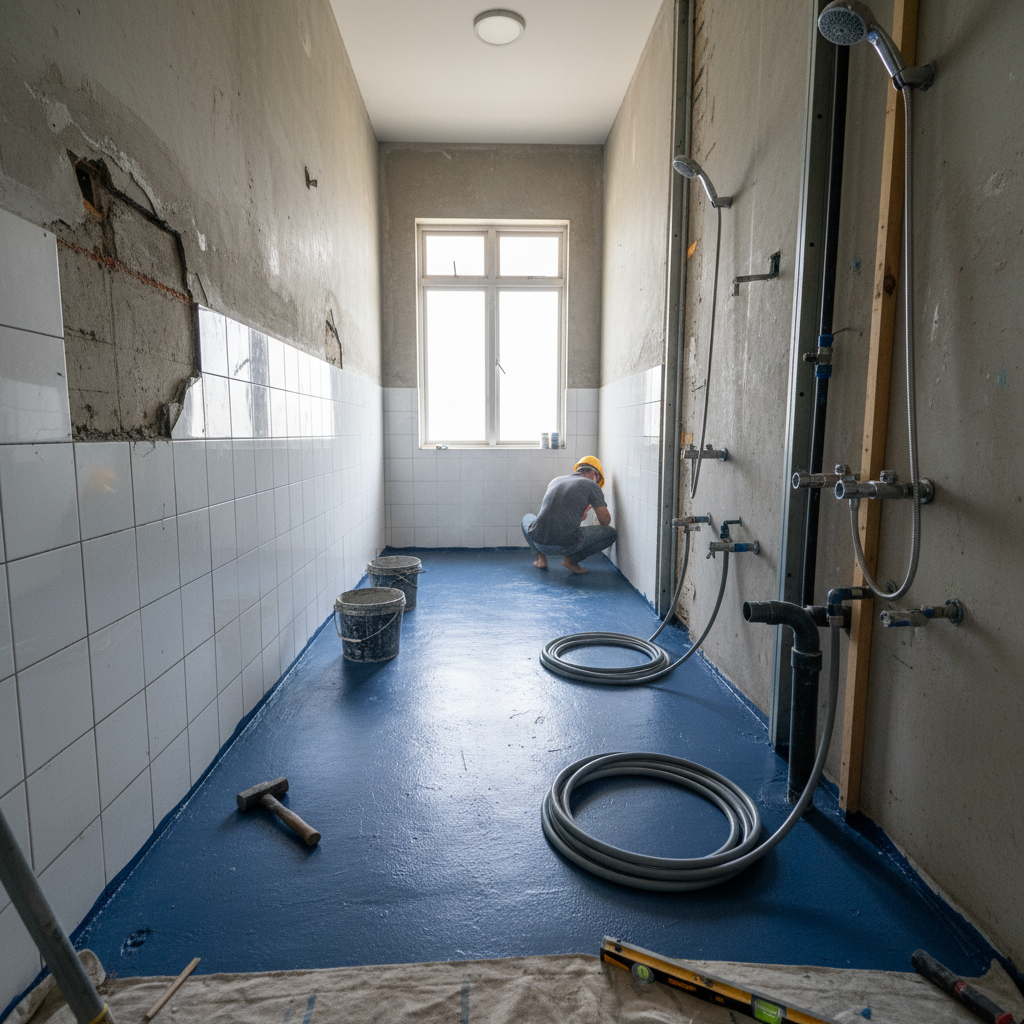
Done properly, the work includes hacking back to a sound base, applying a waterproofing membrane across the floor and up the walls of the shower zone (a minimum of 300mm up every wall, and full height on the shower walls), then verifying with a ponding test before a single tile goes down. Skipping or rushing this step is exactly why some converted bathrooms leak into the ceiling below within a year or two. Our full bathroom waterproofing guide explains the membranes and methods in detail — and it is why BathBro backs every wet-area job with a 10-year waterproofing warranty.
The floor must also be screeded to a proper gradient — a minimum 2% fall toward the floor trap — so water clears quickly instead of pooling against the screen.
Choosing Tiling and a Shower Screen for the New Shower
Two choices define how the finished shower looks and performs:
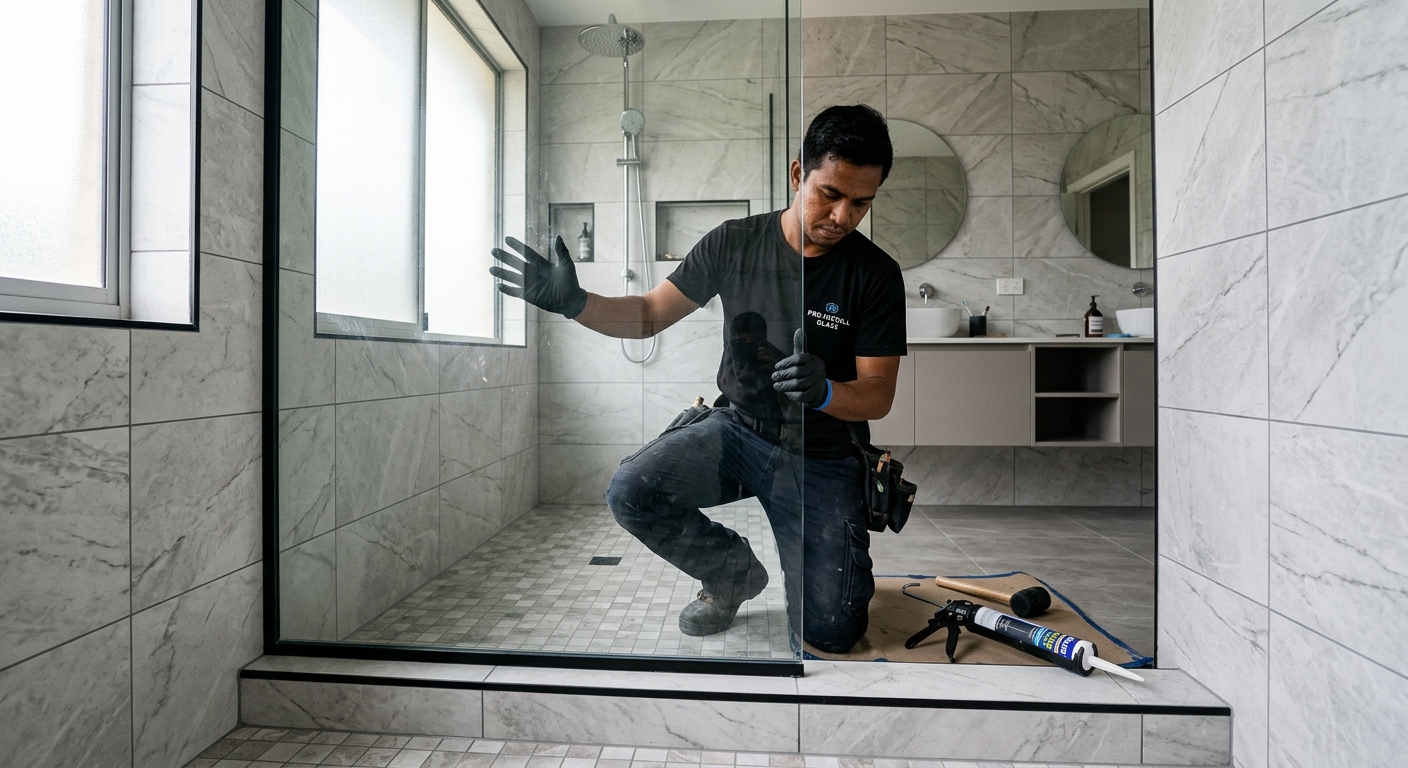
- Floor tiles must be anti-slip. Choose matte or textured porcelain rated R10 or higher for the shower floor — glossy tiles are a hazard the moment soap hits them. Smaller formats (30x30cm or mosaic) inside the shower zone also make it easier to form an accurate fall to the drain.
- The screen sets the style. A fixed frameless panel suits open walk-in layouts; a sliding framed door suits tight rooms where a swing door would clash with the toilet. Tempered glass at 8–10mm feels noticeably more solid than entry-level 6mm.
Wall tiles are where you express the design. Large-format 60x60cm porcelain keeps grout lines to a minimum, which is the easiest surface to keep mould-free in our climate.
When Keeping Your Bathtub Makes Sense
We will happily tell you not to convert when it is the wrong move:
- Young children at home. Bathing toddlers is far easier in a tub. If your kids are under six, it may be worth keeping one tub for a few more years.
- Family-market resale. For larger landed homes aimed at family buyers, having at least one bathtub in the house is a genuine selling point.
- You actually soak. Some people really do use the tub every week. If that is you, renovate around it rather than removing it.
The most common compromise we build: keep one tub in the house and convert the other bathroom to a walk-in shower. Many two-bathroom projects do exactly this.
Common Bathtub Conversion Mistakes to Avoid
- Skipping the waterproofing membrane because "the old floor never leaked" — it never leaked because a tub was sitting on it.
- Reusing the tub's drain position even when it forces a poor gradient. Moving the floor trap costs more upfront but drains properly forever.
- Glossy floor tiles in the shower zone — beautiful in photos, dangerous when wet.
- Ordering the screen before tiling is finished. Screens must be measured against the completed tile surfaces, or ugly gaps appear at the edges.
- Hiring a general handyman for what is fundamentally wet-area work. A conversion is 70% plumbing and waterproofing, 30% cosmetic finishing.
Ready to Convert Your Bathtub?
BathBro handles bathtub to shower conversions across all 16 states in Malaysia, from condos in Kuala Lumpur to landed homes in Johor. WhatsApp us a few photos of your current bathtub and we will reply with a free, no-obligation quote — most conversions are completed within a week, and every project is covered by our 10-year waterproofing warranty.
Bathroom Renovation FAQ
How much does a bathtub to shower conversion cost in Malaysia?
In 2026, a budget conversion runs RM5,000–RM8,000, covering tub removal, plumbing adjustment, shower-zone waterproofing, standard tiles and a framed screen. Mid-range packages are RM8,000–RM15,000 with full re-tiling and a rain shower set, while premium transformations reach RM15,000–RM30,000+. Frameless glass adds roughly RM1,000–RM3,000, and moving the floor trap or condo work restrictions push costs higher.
How long does it take to convert a bathtub into a walk-in shower?
An experienced crew completes a standard conversion in 5–7 working days: day one for tub removal and plumbing, days two to three for screeding, the waterproofing membrane and a ponding test, days four to five for tiling and grouting, and days six to seven for screen installation and handover. Bigger projects with a new toilet or vanity take 8–14 working days.
Will removing the bathtub cause leaks to the floor below?
Only if waterproofing is skipped. The old tub acted as a giant water barrier, so the surfaces beneath it were never built for daily soaking. Proper work means hacking to a sound base, applying a waterproofing membrane at least 300mm up every wall and full height on shower walls, then passing a ponding test before tiling. BathBro backs every wet-area job with 10-year waterproofing coverage.
When should I keep my bathtub instead of converting it?
Keep the tub if you have children under six — bathing toddlers is far easier in a tub — if you genuinely soak every week, or if you own a larger landed home targeting family buyers, where at least one bathtub is a real selling point. The most common compromise: keep one tub and convert the second bathroom into a walk-in shower.
Ready to Renovate Your Bathroom?
WhatsApp us photos of your bathroom — free quote within 24 hours, no obligation.
Get Free Quote